
Behind the Lens: What Goes Into a Great Event Video
A great event video is decided long before anyone calls action. It is built in the planning calls, the camera positions, and the unscripted moments that a prepared crew is ready to catch.
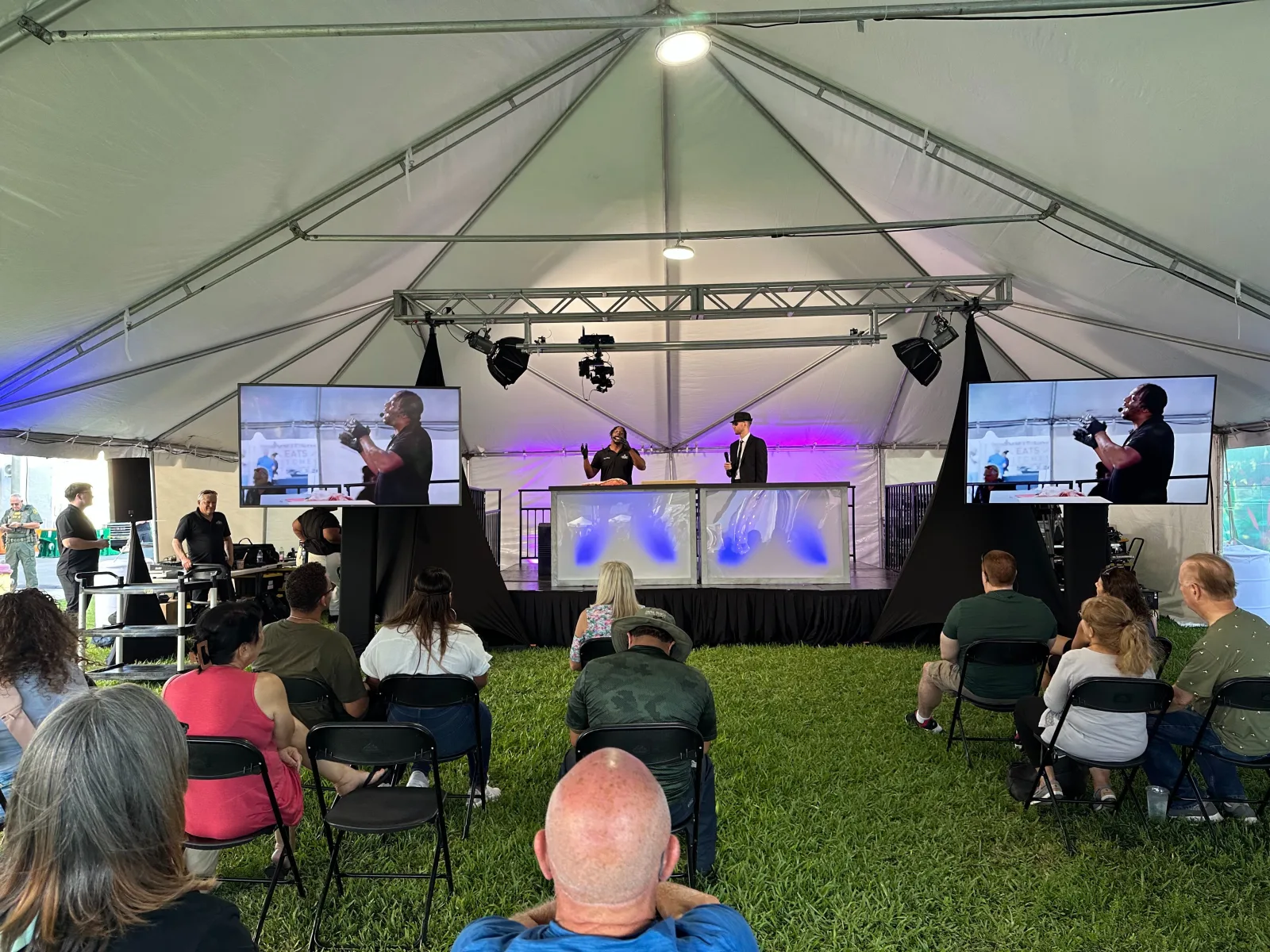 Cover Image
Most people experience an event video as the finished thing: a tight, two-minute recap that makes the room feel electric, lands the speaker's best line, and ends before you want it to. What you do not see is everything that had to go right hours and weeks earlier. The polish on screen is the visible tip of a much larger process, and the difference between a forgettable recording and a video people actually share happens almost entirely off camera.
At Full Moon Creative, we have spent more than 21 years shooting live events across Broward, Miami-Dade, and Palm Beach, from corporate keynotes to municipal ceremonies to product launches. The lesson that keeps repeating is simple: a great event video is not captured. It is planned, then captured, then earned in the edit.
It Starts Before Anyone Hits Record
The best footage on event day is usually the result of a conversation that happened weeks before. Before we touch a camera, we want to know what the video is for. A sizzle reel for next year's sponsors, a full archive of the keynote, and a set of short social cuts are three different shoots, and trying to get all three from a crew that planned for one is how moments get missed.
So the planning stage answers the boring questions that make the exciting footage possible: Where does the light fall when the speaker walks out? Where can a camera live without blocking a guest's view? What is the run of show, and which three minutes actually matter? When you walk the room ahead of time and map the schedule against your camera positions, you stop reacting to the event and start anticipating it. That is the quiet work that separates professional event production from someone with a nice camera and good intentions.
A site walk is where most of those questions get answered for real. Standing in the room tells you things a floor plan never will: that a chandelier throws a hot spot exactly where the lectern sits, that the only clean angle on the stage puts a camera in the path of the catering doors, that the ballroom windows will blow out your exposure until the sun drops behind the next building at half past six. We note where power lives, where we can run cable without becoming a trip hazard, and where a guest's sightline ends so a tripod never sits in it. None of that shows up in the final video, which is exactly the point. The footage looks effortless because the obstacles were solved before the doors opened.
The other thing planning settles is the run of show, minute by minute. We want to know when the lights dim, when the founder takes the stage, when the award gets handed off, and when the room is supposed to react. A crew that has internalized the schedule is not reading a program during the event. They are looking through the viewfinder, already framed on the spot where the next moment is about to happen.
Why Multi-Camera Coverage Changes Everything
A live event happens exactly once, and it does not do second takes. A single camera forces an impossible choice in every moment: hold on the speaker or swing to the crowd, frame the wide shot or push in for the reaction. Whatever you choose, you lose the other angle forever.
Multi-camera coverage removes that gamble. With several cameras rolling at once, you capture the same instant from complementary perspectives, and the edit gets to choose later instead of the operator gambling in the moment. A typical setup gives you:
- A locked wide shot that holds the full stage and acts as your safety net, always rolling, always usable.
- A tight camera on the speaker for the expressions and gestures that carry the emotion of a line.
- A roaming camera for crowd reactions, candid details, and the texture that makes a room feel alive.
- Clean program audio pulled straight from the sound system rather than a camera microphone, so the words are as sharp as the picture.
That last point is where many recordings quietly fall apart. When the same team handles the room's audio and the recording, the sound is captured for the deliverable, not just the speakers in the hall. Because our audio and visual work lives under the same roof as our cameras, the feed that reaches the edit is the feed that was meant to.
Multi-camera coverage also buys you something less obvious: forgiveness. A speaker steps out of frame, a guest crosses in front of the tight lens, a battery dies at the wrong second. On a single-camera shoot, any one of those becomes a hole in the final cut. With overlapping angles, the editor simply cuts to the camera that stayed clean, and the audience never knows anything went wrong. For an event that happens once and cannot be reshot, that redundancy is not a luxury. It is the difference between a recap you are proud to send and a recording you quietly apologize for.
The same logic applies when the event has to reach people who are not in the room. When the coverage is built for live streaming from the start, the program feed that goes out to a remote audience is the same clean signal the edit will use later, so you are not choosing between a live broadcast and a polished recap. You get both from one setup, captured by one crew that planned for both jobs at once.
Capturing the Moments You Cannot Script
The footage that makes an event video memorable is almost never the planned footage. It is the founder getting unexpectedly emotional, the standing ovation that catches everyone off guard, the two attendees who connect in a hallway and do not know a camera is near. You cannot schedule those moments, but you can be ready for them.
Being ready is a discipline, not luck. It means keeping a camera rolling through the parts of the schedule that look like dead air, because that is where the real reactions live. It means a crew that knows the run of show well enough to feel a big moment coming and frame it before it peaks. The candid shot that feels effortless on screen is the product of a team that did the homework, stayed patient, and never stopped watching the room.
You can plan every camera position and still not own the event video. The footage that makes people share it is the unscripted moment, and the only way to catch it on a stage that never repeats itself is to be prepared for it before it happens.
Turning a Live Event Into Lasting Content
An event ends in one night. The content it produces should not. The single biggest waste in event video is treating the shoot as a one-time deliverable instead of a library you will draw from for a year. The same day of footage can become a hero recap, a long-form keynote archive, a dozen vertical clips for social, sponsor highlight reels, and B-roll you reuse in next year's promotion.
Capturing that range is a decision you make in planning, not a happy accident in the edit. When you shoot with the full content calendar in mind, one well-run event feeds your marketing for months. From there, the same team can carry that footage into ongoing video and digital marketing, so the work that aired on stage keeps doing its job in your feed long after the room has emptied.
Why It All Living Under One Roof Matters
Here is the seam where event videos usually break: the crew that shoots is not the team that runs the room's audio, and neither one talks to the people who will distribute the content. Footage sits for days as it moves between vendors, the audio was tuned for the hall instead of the recording, and the recap goes out after the moment has cooled.
When planning, cameras, audio, live streaming, and post all answer to the same team, those handoffs disappear. The people who capture the event know exactly where the footage is going, which is why our South Florida clients get sharper coverage and faster turnaround. One accountable crew owns the outcome from the planning call to the final cut, and that is the whole point.
What a Great Event Video Really Costs You
The honest answer is attention, not just budget. A great event video asks you to decide what the footage is for before the event, to invest in enough coverage that you are not gambling on a single angle, and to trust a crew to chase the moments you cannot see coming. Do that, and you walk away with more than a recording. You walk away with content that carries the energy of the night into everything you publish next.
And the best sign that it all worked is the same one we look for on any live production: a client who got to actually attend their own event, confident the camera caught what mattered while they were busy being present for it.