
Government AV and Broadcast: Building Council Chambers Residents Can Trust
A public meeting is only as transparent as the resident at home can hear and see it. When the audio is muddy, the stream drops, or the captions never show up, trust goes with them. Here is how to build chamber AV and broadcast that actually serves the public.
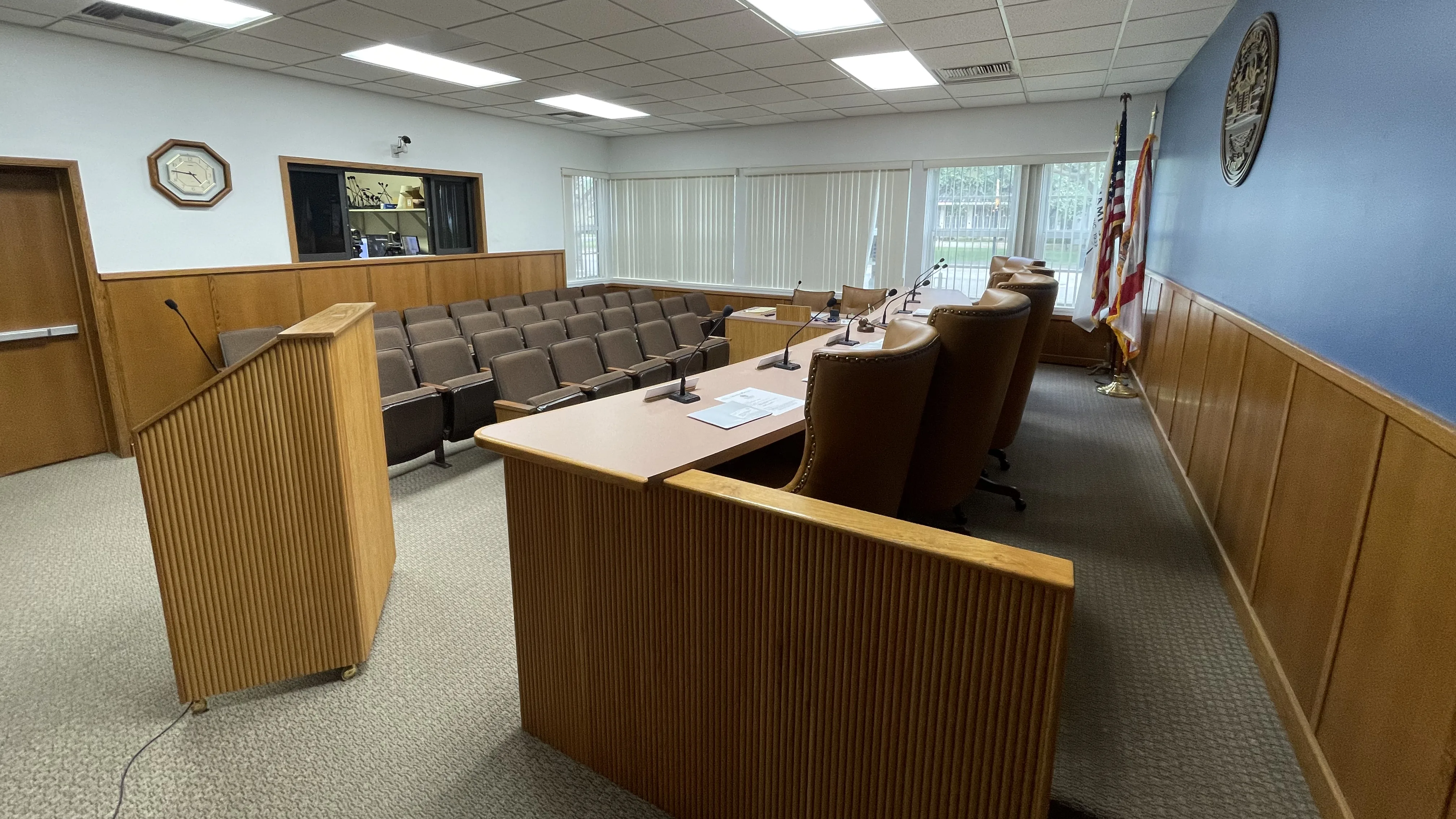 Cover Image
Picture a Tuesday night council meeting. The chamber is half full, a few residents are watching the live stream from their living rooms, and a vote on a budget line is about to happen. A commissioner leans back from the microphone to answer a colleague, and for fifteen seconds the people at home hear nothing but room noise. The motion carries. The next morning, the comment section asks what was actually decided, and whether anyone wanted them to hear it.
Nothing went wrong on purpose. A microphone was placed for a person sitting upright, the stream had no caption track, and the recording captured exactly what the room captured, which was not enough. In government work, those small technical gaps are not just production problems. They are transparency problems, and residents read them as such.
Why Public Meeting AV Is Different
A corporate event has an audience that chose to be there. A public meeting has a constituency that has a right to be there, whether they show up in the room or watch from home. That changes the standard. The goal is not to impress anyone. It is to make sure every resident, on every device, can follow the business of their local government without straining, guessing, or giving up.
That raises the bar in three directions at once. The audio has to be intelligible for someone listening through a phone speaker. The video has to make it clear who is speaking and what is on the screen. And the whole system has to keep working meeting after meeting, because a chamber that goes dark on a controversial night is the one everyone remembers.
There is a second difference that is easy to miss. A public meeting is not a single event you can rehearse and perfect. It is a standing obligation that repeats on a calendar, often weekly, and the people running it on any given night may be a clerk and a part-time tech, not a production crew. A system that only works when an expert is in the room is not actually built for a chamber. The design has to assume the normal operator, the ordinary Tuesday, and the controversial agenda item that draws three times the usual viewers, all at once, with no one available to troubleshoot live.
Audio Is the Whole Ballgame
If a resident cannot hear the meeting, nothing else you build matters. Most chamber complaints trace back to audio, not video, because rooms with high ceilings and hard surfaces are acoustically hostile and microphones get treated as an afterthought. Clear sound in a council chamber comes down to a few disciplines done consistently:
- One voice, one open microphone. Gating and mixing so that the person speaking is heard cleanly and the open mics around them are not adding echo, paper rustle, and side conversation.
- Coverage for everyone at the dais. Microphone placement that accounts for people who lean back, turn to a colleague, or speak softly, not just the person sitting perfectly centered.
- A feed built for the broadcast, not just the room. The audio that reaches the stream and the recording is mixed for a listener at home, which is a different job than filling the chamber.
- Public comment that comes through. A podium or wireless option so a resident at the microphone is as audible as anyone on the dais.
- Room treatment that does the quiet work. No microphone choice fully overcomes a hard, reflective chamber. Acoustic panels, ceiling treatment, and careful speaker aiming reduce the echo that turns a clear voice into a smear by the time it reaches a phone speaker at home.
- Headroom and limiting on the broadcast feed. A passionate resident who raises their voice should not clip the stream into distortion, and a soft-spoken commissioner should still register. Setting levels with margin on both ends keeps the worst moments listenable.
Getting this right is a government AV specialty, and it is where a thoughtful AV installation earns its keep long after the cameras are bolted in.
Reliability Is a Compliance Issue
Many municipalities are required to hold open meetings and to keep a record of them. That turns reliability from a nice-to-have into an obligation. A stream that buffers, a recording that fails to save, or a camera that freezes during a vote is not just an embarrassment. It can undercut the public record and the openness the meeting is supposed to guarantee.
Reliability is engineered, not hoped for. It looks like redundant recording so a single drive or device never holds the only copy, a streaming setup with a backup path when the primary connection stutters, and equipment chosen to run for years of weekly meetings rather than a single flashy install. The simplest test of a chamber system: if one component fails mid-meeting, does the public record survive? If the answer depends on luck, the system is not finished.
In private events, a glitch is a bad night. In a public meeting, a glitch can become a question about whether the government wanted people to see what happened. Reliability is how you answer that question before anyone asks it.
Accessibility Is Not Optional
Serving residents means serving all of them, including those who are deaf or hard of hearing, those who do not speak English as a first language, and those who rely on screen readers and assistive devices at home. Accessibility is both the right thing and, for many public bodies, a legal expectation.
In practice that means captioning on the live stream and the archive, audio mixed clearly enough to support those captions and assistive listening, video framing that consistently identifies the active speaker, and an on-demand archive that residents can navigate by agenda item rather than scrubbing through hours of footage. None of this is exotic. It just has to be designed in from the start instead of bolted on after the first complaint.
PEG Channels and the Modern Living Room
Public, educational, and government channels were built for a world where residents watched on cable. That audience has not disappeared, but it has been joined by everyone who now watches on a phone, a laptop, or a smart TV app. A modern chamber feeds both without forcing the clerk to run two productions.
That is the value of treating the chamber as a single source that distributes everywhere: the cable channel, the municipal website, and the social or streaming platforms residents already use. The same live streaming backbone that pushes the meeting to a PEG channel can deliver it to the website player and archive it for on-demand viewing, so the clerk publishes once and the public can find it anywhere. Reaching residents where they actually are is no longer a bonus. It is the baseline expectation of an open meeting.
One Roof for the Whole System
Chamber AV is rarely one purchase. It is cameras, microphones, displays, control, recording, streaming, and the integration that makes them behave as one system, often installed around a meeting schedule that cannot pause for construction. When those pieces come from different vendors, the seams show in exactly the wrong moment, and the clerk becomes the person translating between an installer, a streaming provider, and an integrator on a meeting night.
For South Florida municipalities across Broward, Miami-Dade, and Palm Beach, the cleaner path is one accountable team that designs, installs, and supports the whole chamber, and that understands the difference between a corporate ballroom and a public record. With more than 21 years of work across video, live events, AV installs, and streaming under one roof, Full Moon Creative builds chamber systems for the night something goes wrong, not just the day of the ribbon cutting.