
How to Save Money When Booking Event Production and AV Services
A tighter budget does not have to mean a smaller event. With a few decisions made early, you can lower the cost of production and AV in South Florida without anyone in the room ever noticing the savings.
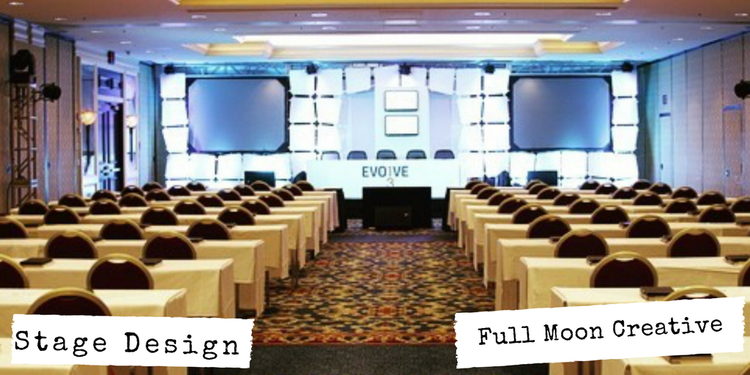 Cover Image
Most people try to save money on an event the same way: they ask every vendor for a discount. It rarely works, and when it does, the savings tend to show up later as a smaller crew, older gear, or a corner quietly cut on show day. The events that come in under budget are not the ones that haggled the hardest. They are the ones that made a handful of smart structural decisions before the first quote ever landed.
If you are planning a corporate event, conference, gala, or municipal program anywhere in Broward, Miami-Dade, or Palm Beach, here is where the real savings live, and none of them require you to settle for a weaker event.
It helps to understand where event budgets actually leak. A production quote is built from a handful of moving parts: equipment rental, crew labor, load-in and load-out time, transportation, and the margin each company adds to cover its own risk. When you only negotiate the headline number, you leave every one of those underlying drivers untouched. The decisions below work because they change the structure of the quote itself, so the savings are durable rather than a one-time concession a vendor can claw back somewhere you will not see it.
Bundle Production and AV Under One Vendor
The single largest source of savings is also the least obvious: stop splitting your event across separate companies. When you hire one vendor for event production, another for the AV, a third for the live stream, and a fourth for the recap video, you are not just paying four fees. You are paying for the gaps between them. Every handoff between vendors adds a coordination cost, a duplicated piece of gear, and a margin that gets baked into each separate quote.
A single team that handles staging, sound, lighting, and capture together does not bill you twice for the same labor. One crew loads in once. One set of equipment covers multiple needs. One project lead owns the timeline instead of four companies protecting their own. The discount you were chasing across four vendors is usually smaller than the overhead you eliminate by consolidating to one.
Consider how a multi-vendor day actually unfolds. The AV company arrives at its own call time and stages its gear. The stage and lighting crew shows up separately, often needing the same power drops and the same floor space, so the two teams negotiate the room in real time while the clock runs on both. The video crew rolls in with its own cameras and its own audio, then asks the AV company for a clean feed that nobody scoped in advance. Each of those frictions is billable. When one team owns all of it, the load-in is sequenced once, the power and rigging are planned together, and the audio feed for the cameras is simply part of the same console that runs the room.
- One mobilization, not four. Trucks, fuel, and travel time are charged per company. Collapsing four arrivals into one removes three of them outright.
- Shared infrastructure. Power distribution, rigging points, and cabling get used by every part of the show instead of being duplicated by each vendor who does not trust the next one's setup.
- One margin instead of several. Every separate quote carries its own markup. Consolidating means you pay that margin once on the whole scope, not repeatedly on overlapping pieces.
Plan Early, Pay Less
Time is the cheapest lever you have, and most people waste it. Booking your event production and AV well in advance does more than secure your date. It unlocks savings that simply are not available to a last-minute client.
- Better rates on gear and crew. When a team can schedule your event into an open window instead of rearranging around it, you avoid the premium that rush bookings always carry.
- Fewer expedite fees. Early planning means standard shipping on rentals, normal turnaround on graphics, and no overnight charges to make a deadline that good scheduling would have prevented.
- Room to right-size. With weeks instead of days, your vendor can actually study the venue and the run of show, then spec exactly what the event needs rather than over-provisioning to be safe.
- Leverage to compare. Early decisions give you time to weigh options calmly instead of accepting the first available quote because the clock is running.
The closer you book to the date, the more you pay for the privilege of being late. Lock in your South Florida production partner early and a large share of the savings takes care of itself.
Right-Size the Gear to the Room
It is easy to over-spec an event. Bigger screens, more speakers, and extra cameras feel like insurance, but every added piece of equipment carries rental, labor, and load-in cost. The goal is not the most gear. It is the right gear for the room, the audience size, and what the event actually needs to accomplish.
A breakout session for forty people does not need the rig built for a thousand-seat general session. A panel that will be recorded for internal use does not need the same camera package as a broadcast keynote. A vendor who knows your venues across Miami-Dade and Palm Beach can match the equipment to the space precisely, which trims cost without anyone in the audience sensing a thing. This is also where pairing production with live streaming pays off: when the same team captures the room and the broadcast, you avoid duplicating cameras, switchers, and audio feeds for two separate crews.
Saving money on an event is rarely about paying less for the same thing. It is about removing the cost that should never have been in the quote: the duplicated gear, the rush fees, and the coordination tax of vendors who do not talk.
Eliminate the Coordination Tax
Every event has a hidden line item that never appears on an invoice: the hours someone spends managing the vendors. When your AV company, your stage team, and your video crew all answer to different bosses, you become the translator between them. That labor is real, and on event day it falls on the person who can least afford to be distracted.
Consolidating to one accountable team erases that cost. There is one schedule, one point of contact, and one phone number that owns the answer when something needs a decision at 5pm on show day. You stop paying, in time and stress, to keep separate companies in sync, because they were never separate to begin with.
There is a procurement benefit here too, and it matters most for the organizations that buy events on a budget cycle. One vendor means one contract, one certificate of insurance, one invoice to reconcile, and one party to hold accountable if something goes sideways. For corporate and government buyers, that single line of accountability is often worth as much as the dollar savings, because it removes the finger-pointing that happens when three companies share a stage and a problem.
Reuse What You Build
The event itself is only part of the value. The footage, photos, and assets your team captures can do far more than sit in a folder. When you plan capture into the event from the start, you walk away with content for marketing, recruiting, sponsor recaps, and next year's promotion, all produced in the same booking instead of commissioned later at full price.
This is where a partner who also handles video production changes the math. The crew already on site for your live event can capture broadcast-quality footage at the same time, so you are not paying a second company to shoot what was already in front of them. One booking, multiple deliverables, no second mobilization fee. For government and municipal programs, the same logic applies to recurring meetings and public events, where a standing AV setup avoids the cost of rebuilding from scratch each time.
What Saving Money Should Never Mean
There is a version of cost-cutting that always backfires: trimming the crew, skipping the redundancy, or choosing a vendor purely on the lowest number. A backup audio feed and a spare projector are not where you save. They are the difference between a smooth event and a public failure that costs far more than the line item you cut. Real savings come from structure, early planning, and consolidation, not from gambling on the parts that keep the show running.
With more than 21 years of work across South Florida, the events that come in lean are the ones built lean from the first call. Full Moon Creative has been delivering video production, live events, AV installs, and live streaming under one roof since 2005, and the pattern holds every time: decide early, put it all with one accountable team, spec the gear to the room, and let the savings come from the cost you removed rather than the quality you gave up. That is the whole playbook, and it works because it changes how the quote is built rather than asking anyone to do less.