
SEO in 2026: Beyond Keyword Stuffing
Stuffing a page with the right phrases used to be enough to rank. In 2026, search engines and AI assistants want to understand what your business actually is, what it does, and who it serves. Here is the playbook that gets you found.
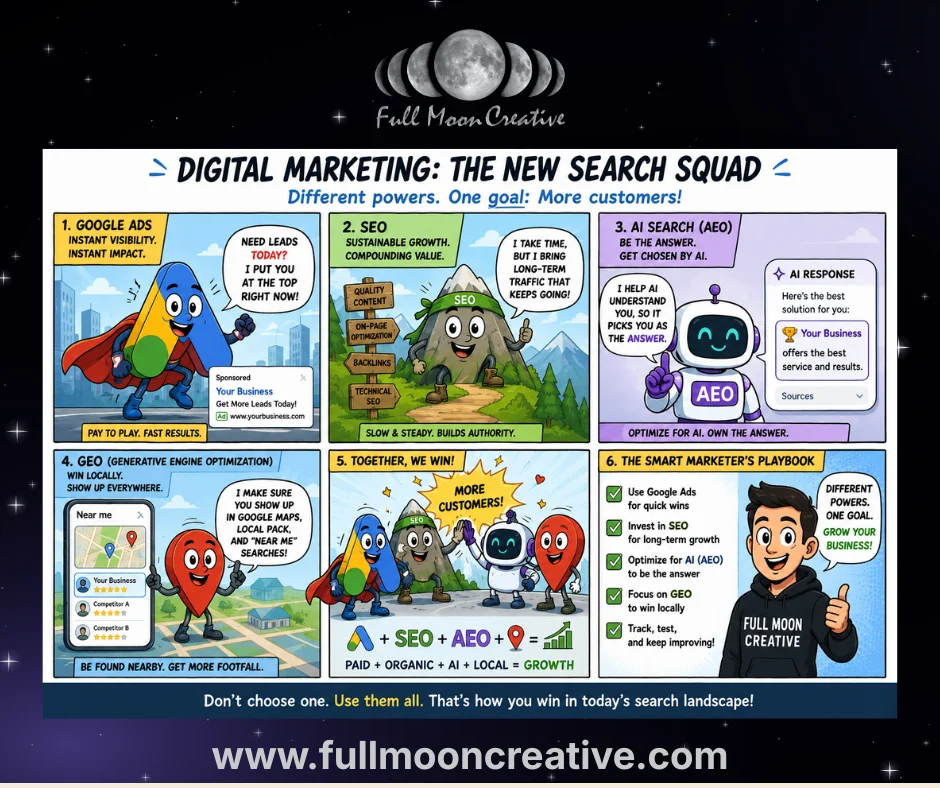 Cover Image
For years, search engine optimization had a reputation it earned honestly. Find the phrase your customers type, repeat it on the page until the math looked right, build a pile of links, and watch the rankings climb. That approach is now actively working against you. The systems that decide what gets found, both traditional search engines and the AI assistants people increasingly ask first, have moved past matching words. They are trying to understand meaning, intent, and trust. If your SEO still starts and ends with keywords, you are optimizing for a search era that no longer exists.
The good news is that the modern playbook is more durable than the old one. It rewards businesses that are genuinely clear about who they are and what they do, which is something a real company can build once and benefit from for years. Here is what that playbook looks like in 2026, and how the pieces fit together.
From Keywords to Entities
The single biggest shift is the move from keywords to entities. A keyword is a string of text. An entity is a thing the search engine recognizes as real: a company, a place, a service, a person. When a search engine understands that Full Moon Creative is a video production and AV company that operates in Broward, Miami-Dade, and Palm Beach, it can connect you to a wide range of related searches you never explicitly targeted, because it understands what you are rather than just the words on the page.
Building entity clarity means being consistent and unambiguous about your identity everywhere you appear. Your name, your location, your services, and your relationships to other entities should line up across your site, your business listings, and the web. The more coherent that picture is, the more confidently a search engine can recommend you. Scattered, contradictory signals do the opposite, and no amount of keyword density fixes them.
The damage from inconsistency is usually quiet. A business name written three different ways, an old address on a directory, a service you dropped years ago but never removed: none of these throw an error, they just blur the picture. The search engine cannot tell which version of you is current, so it hedges, and hedging looks like a ranking that never quite arrives. Cleaning that up is unglamorous work, but it is often the highest-leverage thing a real business can do, because it turns a fuzzy signal into a confident one.
Schema: Speaking the Machine's Language
Structured data, usually written as schema markup, is how you tell a search engine exactly what a page contains instead of hoping it guesses correctly. It is a layer of code that labels your content: this is an organization, this is a service, this is an article, this is a frequently asked question. The visitor never sees it, but the machine reading the page does, and that clarity is increasingly the difference between being understood and being overlooked.
Schema is not a growth hack. It is plumbing. Done well, it makes you eligible for richer search results and gives AI systems clean, reliable facts to pull from. This very page uses structured data to declare its author, its publish date, and its place in the site. That kind of markup is part of how a well-built digital marketing foundation earns trust from the systems doing the ranking.
Answer Engine Optimization for AI Assistants
A growing share of buyers no longer scroll a page of blue links. They ask an AI assistant a question and read the answer it composes. That changes the goal. You are no longer only competing to rank. You are competing to be cited, summarized, and recommended inside an answer you do not control. This is answer engine optimization, and it is quickly becoming as important as classic SEO.
To earn a place in those answers, your content has to be easy for a machine to extract and trust. A few practices consistently help:
- Answer real questions directly. Lead with a clear, self-contained response to the question a buyer actually asked, then expand. AI systems lift clean, complete answers far more readily than they untangle vague ones.
- Structure content for extraction. Use descriptive headings, short paragraphs, and lists so a model can isolate the exact passage that answers a query without guessing.
- State facts plainly. Make your services, your service area, and your differentiators explicit rather than implied, so an assistant can repeat them accurately.
- Reinforce identity with structured data. The same schema that helps search engines gives AI assistants verified facts to cite instead of inference.
The businesses that show up inside AI answers are usually the ones that were already clear, consistent, and well structured. The work compounds.
Content Built Around Buyer Intent
Modern search rewards content that matches what a person actually wants at the moment they search, not just the phrase they typed. Someone searching for a live streaming company in South Florida is at a different stage than someone reading about how live streaming works. One is ready to talk. The other is still learning. Strong content meets each of them where they are.
Map your content to the journey. Educational pieces answer the early questions and build authority. Service pages speak to buyers who are comparing options and need to understand exactly what you deliver, whether that is video production, live streaming, or a full event build. When your content lines up with intent, every visit does more work, because the right people arrive ready for the right next step instead of bouncing off a page that answered a question they were not asking.
Keywords tell a search engine what words are on your page. Intent, entities, and structure tell it whether you are the right answer. In 2026, only the second group moves the needle.
Technical Health Is Non-Negotiable
None of the above survives a slow, broken, or confusing website. Technical SEO is the foundation everything else sits on, and search engines treat it as a baseline expectation rather than a bonus. Pages that load quickly, work cleanly on a phone, and present a clear, crawlable structure give both search engines and visitors a reason to stay. Pages that stall, shift around as they load, or hide content behind clutter quietly bleed rankings no matter how good the writing is.
The fundamentals have not changed, even as the ranking systems have grown more sophisticated. Fast load times, mobile-first design, secure connections, logical site architecture, and clean internal linking still carry real weight. They are also the easiest wins to overlook, because they are invisible when they work and obvious only when they fail.
It helps to think of technical health as a checklist a visitor and a crawler walk through together. A few items earn their place every time:
- Speed on a real phone. Test on a mid-range device over a normal connection, not a fast laptop on office wifi. That is closer to how most buyers actually arrive, and it is the experience the ranking systems try to model.
- Stable layout as the page loads. Content that jumps around while images and fonts settle frustrates people and signals a rushed build. Reserve space for media so the page holds still.
- A structure a crawler can follow. Clear navigation, descriptive links, and a logical hierarchy let a search engine map your whole site instead of stumbling through it.
- Internal links that connect related work. Pointing a buyer from an article to the matching service page spreads authority and keeps the right people moving forward.
How the Pieces Fit Together
It is tempting to treat each of these as a separate project, but the leverage comes from how they reinforce one another. Clear entities make your schema more credible. Credible schema feeds better AI answers. Intent-driven content gives those systems something worth recommending. Technical health makes sure all of it is fast, reachable, and trusted. Pull on one thread and the others tighten with it.
This is also why SEO works best alongside the rest of your marketing rather than off in a silo. The same clarity that helps a search engine understand a South Florida business in Broward, Miami-Dade, or Palm Beach also makes your digital marketing sharper, your messaging more consistent, and your brand easier to trust. With more than 21 years of work across video, events, AV, and digital under one roof, we have seen that the businesses that win in search are usually the ones that were clear about who they are first.
Where to Start
You do not have to rebuild everything at once. Start by auditing how clearly your site states what you do, where you operate, and who you serve, then add structured data so the machines can read it. From there, shape your content around the questions real buyers ask and tighten the technical foundation underneath it. Each step makes the next one more effective, and together they build something a passing algorithm update cannot easily knock down.
Keyword stuffing optimized for a search engine. The 2026 playbook optimizes for being understood, by people and by the machines they increasingly ask first. Get that right, and the rankings tend to follow.